
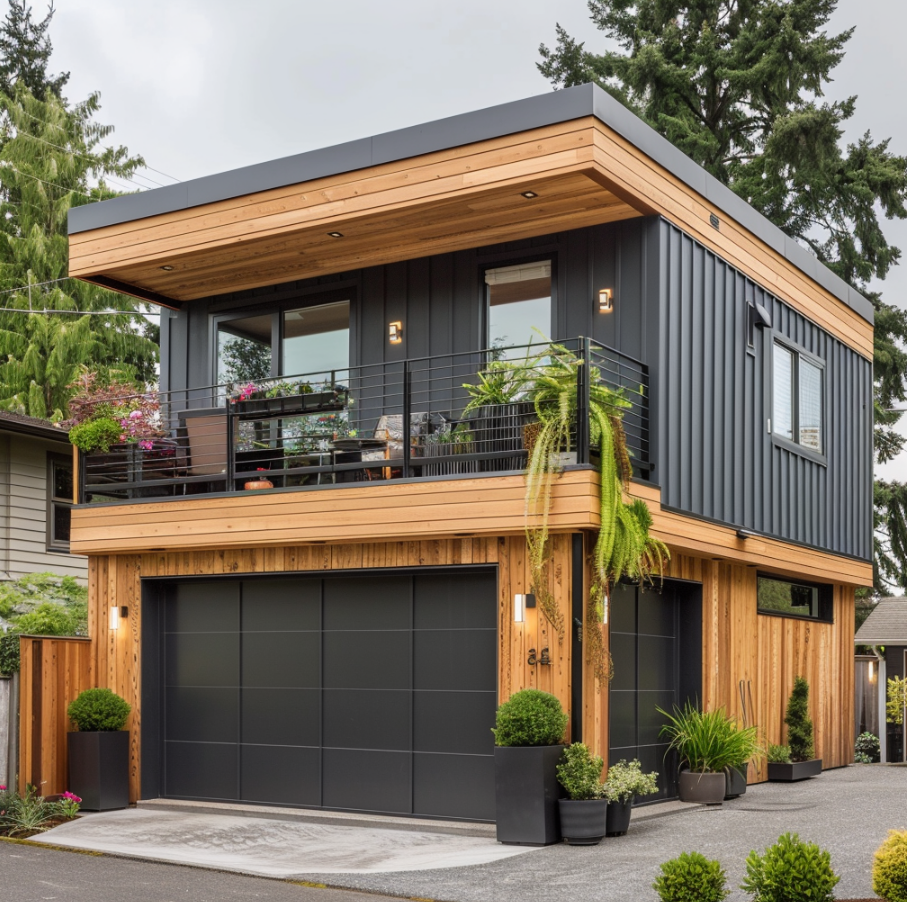
An Accessory Dwelling Unit is not a secondary structure. It’s a strategic asset.
When designed intentionally, an ADU becomes a multi-functional living environment that adapts to changing seasons of life—hosting family, generating income, supporting remote work, or providing long-term independence.
When designed casually, it becomes underutilized square footage. Purpose makes the difference.
Defining the Primary Function First
Every successful ADU begins with clarity. Before design begins, homeowners should define its primary role.
Common uses include:
- Rental income property
- Guest residence
- Multi-generational housing
- Home office or studio
- Caregiver suite
- Short-term rental unit
This decision shapes every subsequent choice.
Without it, design lacks direction.
Designing Flexible Interior Layouts
Because ADUs often evolve over time, layouts must accommodate change.
Rigid plans limit future value.
Creating Multi-Purpose Living Zones
Strong ADU layouts support multiple functions within the same footprint.
Examples include:
- Living areas that convert to sleeping zones
- Dining spaces that double as workstations
- Lofted sleeping platforms
- Fold-away furniture systems
- Convertible storage walls
Flexibility multiplies usable space.
Prioritizing Open Circulation
Unnecessary partitions reduce usability.
Efficient ADUs favor:
- Open sightlines
- Minimal corridors
- Integrated room functions
- Logical movement paths
Flow increases perceived size.
Maximizing Vertical Space
Small footprints demand vertical thinking.
Height is opportunity.
Incorporating Loft and Mezzanine Areas
Lofts expand living capacity without increasing square footage.
They are ideal for:
- Sleeping areas
- Storage zones
- Creative studios
- Guest retreats
Proper stair and ladder design is essential for safety and comfort.
Using Full-Height Storage Systems
Wall height should never be wasted.
High-performance ADUs include:
- Floor-to-ceiling cabinetry
- Integrated shelving
- Vertical closets
- Hidden wall storage
Storage supports livability.
Optimizing Natural Light and Visual Expansion
Light determines how space feels.
Small spaces require abundant daylight.
Strategic Window Placement
Well-positioned windows support:
- Cross ventilation
- Privacy control
- Daylight balance
- Outdoor connection
Glass placement matters more than size.
Using Reflective and Light Materials
Interior finishes influence spatial perception.
Effective choices include:
- Soft neutral walls
- Matte light-reflective surfaces
- Glass partitions
- Minimal visual clutter
Brightness expands perception.
Integrating Smart Storage Solutions
Storage must be embedded—not added later.
Built-In and Hidden Systems
Successful ADUs use:
- Under-bed drawers
- Staircase storage
- Bench seating with compartments
- Recessed wall niches
- Toe-kick drawers
Every inch serves purpose.
Creating Distinct Zones Without Walls
Open does not mean undefined.
Zones require subtle cues.
Using Materials and Lighting for Separation
Zoning tools include:
- Ceiling height changes
- Floor material transitions
- Area rugs
- Lighting variations
- Partial screens
Boundaries without barriers.
Supporting Indoor-Outdoor Connectivity
Outdoor space extends living capacity.
Even small patios multiply usability.
Designing Exterior Extensions
Effective ADUs often include:
- Private patios
- Courtyard access
- Balcony spaces
- Garden zones
- Covered entries
Outdoor rooms expand lifestyle.
Incorporating Technology and Smart Systems
Small homes benefit from efficient systems.
Automation reduces friction.
Smart Space Management Tools
Common solutions include:
- Programmable lighting
- Zoned climate control
- Integrated audio
- Remote security access
- Energy monitoring
Efficiency improves comfort.
Planning for Privacy and Acoustic Control
Small spaces amplify sound.
Privacy must be engineered.
Managing Noise and Separation
Design strategies include:
- Sound-insulated walls
- Solid core doors
- Soft furnishings
- Strategic room placement
Quiet supports livability.
Designing for Long-Term Adaptability
ADUs often shift roles over time.
Strong designs accommodate:
- Aging occupants
- Changing family needs
- Market rental shifts
- Remote work trends
- Health-related modifications
Adaptability protects value.
Avoiding Common ADU Design Mistakes
Many ADUs underperform due to avoidable errors.
Common pitfalls include:
- Overcrowded layouts
- Insufficient storage
- Poor lighting
- Inflexible furniture
- Neglecting privacy
Efficiency requires discipline.
Financial and Lifestyle Return on Design
Well-designed ADUs deliver layered benefits.
Owners experience:
- Higher rental income
- Lower vacancy rates
- Improved property value
- Greater family flexibility
- Reduced relocation costs
Design multiplies return.
Our Approach at Drapers Homes
At Drapers Homes, we design ADUs as dynamic living systems.
We analyze lifestyle needs, site constraints, zoning requirements, and future adaptability before shaping layouts. Our goal is to ensure every ADU remains useful, comfortable, and valuable throughout its lifecycle.
We do not design small spaces casually. We design them intelligently.
If you are planning an ADU in Utah, we are here to help you transform limited square footage into lasting opportunity. Because smart space is powerful space.