
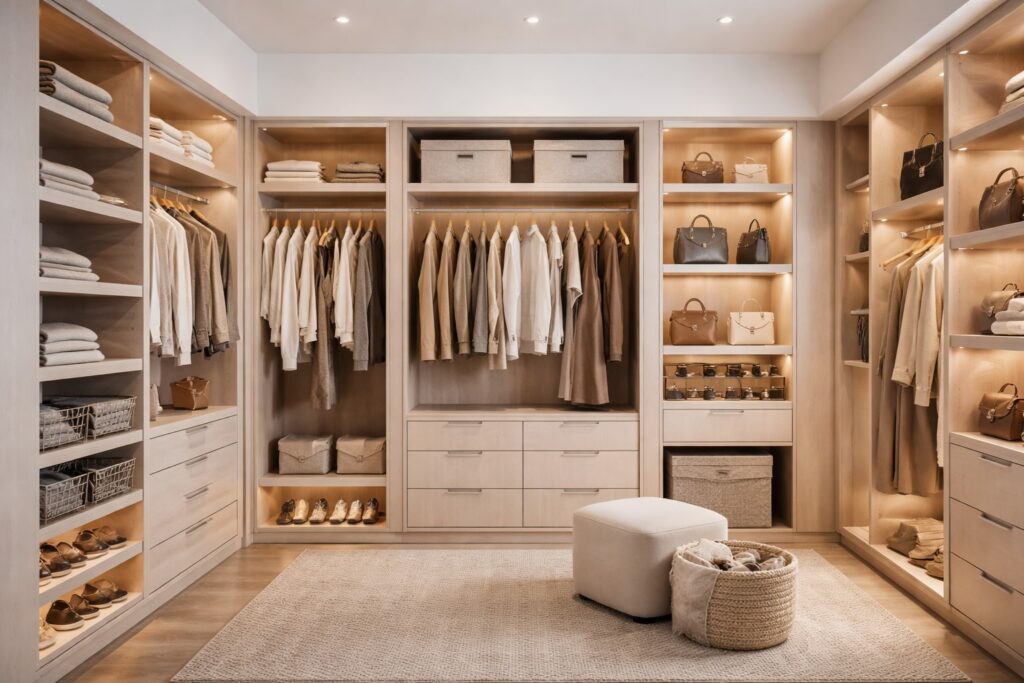
A well-designed closet is not about appearance.
It’s about function.
It determines how smoothly your mornings begin, how efficiently you store what you own, and how much unnecessary stress you carry through daily routines.
When closets are designed without intention, they become crowded, inefficient, and difficult to maintain. When they are planned thoughtfully, they support order, simplicity, and ease.
Here are five practical ways to transform your closet into a space that truly works.
1. Design Around How You Actually Use the Space
The most common mistake in closet design is copying layouts that don’t match real life.
Before changing anything, consider:
How often you access certain items
Which clothes you wear most
Where clutter tends to collect
How seasonal storage is handled
Closets should be built around behavior—not aspiration.
A design that reflects daily habits will always outperform one based on appearances.
2. Invest in Built-In Storage Systems
Wire shelving and temporary organizers rarely age well.
Custom or semi-custom built-in systems provide structural stability and long-term flexibility. Adjustable shelves, reinforced hanging rods, and integrated drawers allow the space to evolve as needs change.
Quality materials prevent sagging, warping, and premature wear.
Over time, durable construction costs less than repeated replacements.
3. Use Vertical Space Efficiently
Most closets waste valuable height.
Upper shelving can store seasonal items. Double-hanging rods increase capacity. Tall cabinets utilize space that often goes unused.
When vertical space is planned correctly, closets feel larger without expanding square footage.
It’s one of the simplest ways to improve storage performance.
4. Create Clear Zones for Different Categories
Organization is easier when everything has a defined place.
Effective closets separate:
Everyday clothing
Formal wear
Shoes
Accessories
Seasonal items
Zoning reduces visual clutter and simplifies maintenance. It also prevents overcrowding in high-use areas.
When storage is intuitive, order becomes automatic.
5. Prioritize Lighting and Accessibility
Closets are often underlit.
Poor lighting makes it difficult to see colors, textures, and details. Integrated LED fixtures, motion sensors, and targeted task lighting improve both function and safety.
Accessibility matters as well. Shelves, rods, and drawers should be reachable without strain.
A well-designed closet should feel easy to use—not like a daily obstacle course.
Building Storage That Lasts
True organization is not maintained by discipline alone.
It’s supported by design.
When storage systems align with daily patterns, people naturally keep them orderly. When they don’t, clutter returns—regardless of effort.
Long-term success depends on materials, layout, and craftsmanship.
Our Approach at Drapers Homes
At Drapers Homes, we approach storage design the same way we approach structural construction—with planning, precision, and durability in mind.
Closets are not secondary spaces. They are essential systems that support the entire home.
Whether you’re remodeling an existing closet or building a new one, we help create solutions that work quietly and reliably for years to come.
Because good design doesn’t demand constant attention.
It simply works.