
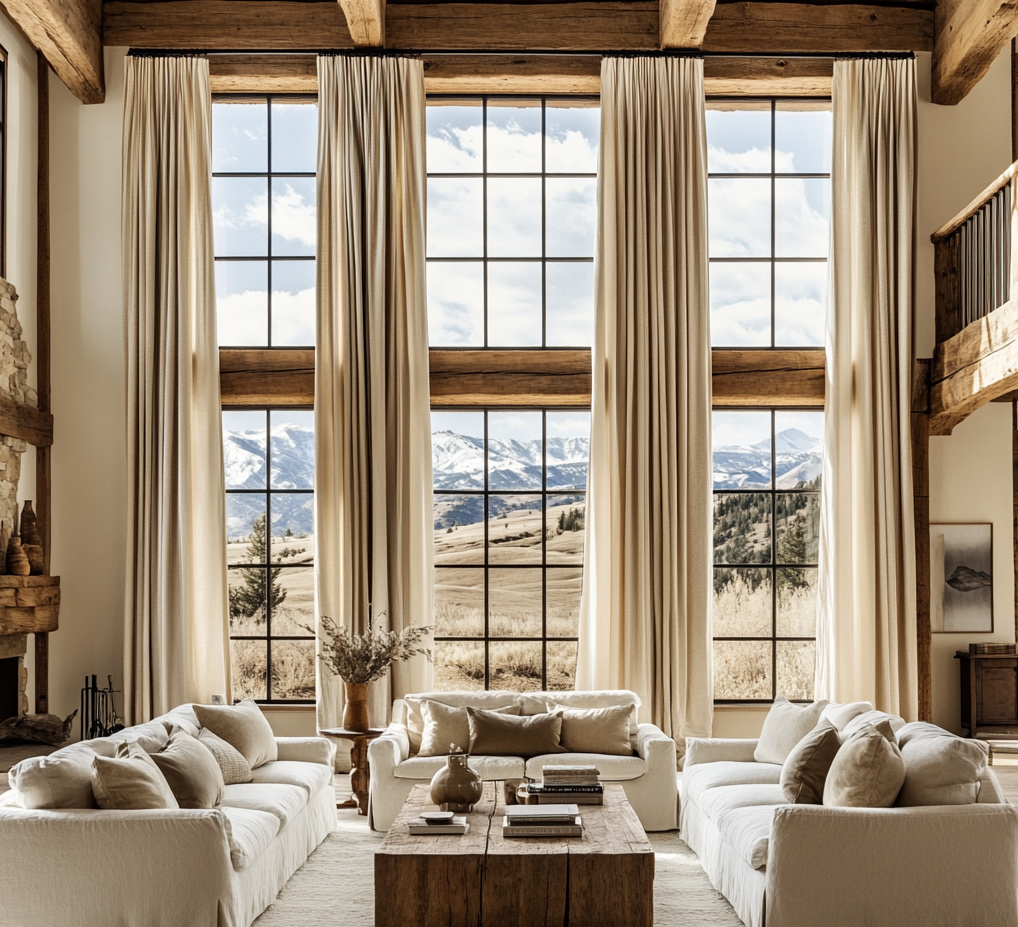
Window treatments do more than frame a view.
- They regulate light.
- Support privacy.
- Improve energy efficiency.
- Shape acoustics.
- Protect interior finishes.
When drapery fabrics are chosen well, they enhance comfort and longevity. When chosen poorly, they fade, sag, trap dust, and require early replacement.
Good fabric selection is not decorative.
It is functional design.
Choosing Drapery Fabrics That Balance Beauty and Performance
Successful window treatments must work in real conditions.
They face direct sunlight, seasonal temperature changes, humidity shifts, and daily use. The right fabric balances appearance with durability, insulation, and maintenance needs.
The following five fabric categories consistently perform well in residential settings.
Linen and Linen Blends
Linen offers natural texture and quiet elegance. It filters light beautifully and complements both traditional and modern interiors. However, pure linen wrinkles easily and can fade in strong sunlight.
High-quality linen blends improve durability while maintaining softness and visual depth.
Best used in living areas and dining rooms where natural light and atmosphere matter most.
Cotton and Cotton Blends
Cotton remains one of the most versatile drapery fabrics.
It’s breathable, affordable, and available in a wide range of weaves and weights. Blended cotton fabrics resist shrinking and wrinkling better than pure cotton.
Cotton performs well in casual spaces, bedrooms, and family rooms where comfort and practicality are priorities.
Proper lining improves longevity and insulation.
Velvet and Plush Fabrics
Velvet and similar plush fabrics provide excellent light control and insulation.
Their dense structure blocks drafts, dampens sound, and creates a sense of warmth. These fabrics are ideal for formal spaces, media rooms, and bedrooms.
High-quality velvet resists crushing and maintains its shape over time. Lower-quality versions show wear quickly.
Material quality matters significantly in this category.
Silk and Silk Blends
Silk offers unmatched visual richness.
Its natural sheen reflects light in subtle ways and adds refinement to formal interiors. However, pure silk is sensitive to sunlight and moisture.
Silk blends improve durability while preserving elegance. Proper lining and UV protection are essential.
These fabrics are best reserved for low-exposure areas.
Performance and Synthetic Fabrics
Modern performance fabrics combine durability with refined appearance.
Polyester, acrylic, and engineered blends resist fading, moisture, and stretching. Many are designed specifically for high-sun and high-humidity environments.
These fabrics are ideal for:
- South-facing windows
- Kitchens and bathrooms
- High-traffic spaces
- Homes with children or pets
When chosen carefully, performance fabrics deliver longevity without sacrificing style.
The Importance of Lining and Construction
Fabric alone does not determine performance.
Proper lining improves:
- Insulation
- Light control
- Privacy
- Fade resistance
- Drape structure
Interlining adds further thermal and acoustic benefits.
Construction quality—stitching, pleating, and hardware—also affects how drapery ages.
Well-built treatments last years longer than poorly constructed ones.
Matching Fabric to Room Function
Each room places different demands on window treatments.
Living spaces benefit from light-filtering fabrics. Bedrooms often require blackout or insulating materials. Kitchens and baths need moisture-resistant options.
Choosing fabric without considering room function leads to early replacement.
Good design respects use patterns.
Designing for Climate and Orientation
Window exposure matters.
South- and west-facing windows receive intense sunlight. North-facing windows prioritize insulation. High-altitude climates increase UV impact.
Fabric selection should reflect these realities.
Ignoring climate conditions shortens lifespan.
Planning for Long-Term Maintenance
Maintenance is part of design.
Some fabrics require professional cleaning. Others tolerate machine washing. Some attract dust more easily.
Homeowners should understand care requirements before selecting materials.
Ease of maintenance supports long-term satisfaction.
Our Approach at Drapers Homes
At Drapers Homes, we treat window treatments as part of the home’s performance system. We consider light exposure, insulation needs, room use, and material durability before recommending fabrics or construction methods.
Our goal is not to follow trends. It is to create interiors that remain comfortable, efficient, and beautiful over time.
If you are planning new window treatments as part of a renovation or new build, we are here to help you choose solutions that serve both function and design.
Because the right materials do more than look good. They work.