
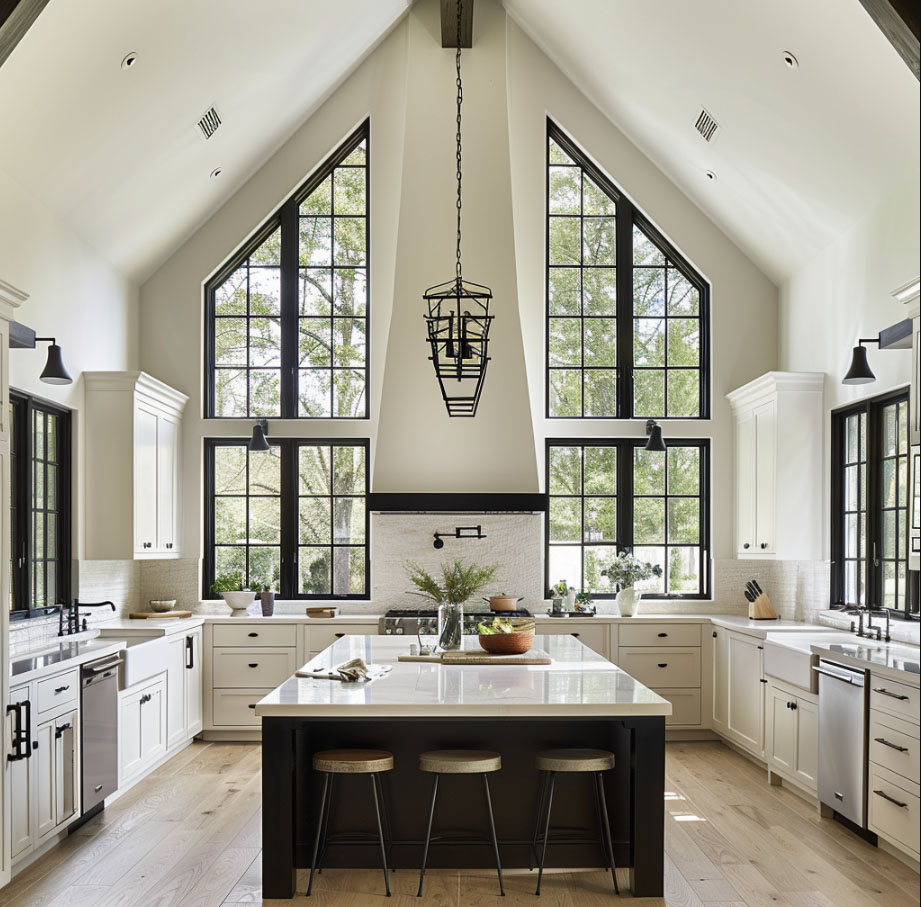
Cabinetry is not furniture.
Cabinetry architecture.
It shapes how rooms function, how spaces feel, how routines unfold, and how order is maintained. Long after countertops are replaced and wall colors change, cabinetry remains.
It’s the backbone of daily life. In well-designed homes, cabinets do not announce themselves. They support everything.
Understanding Cabinetry as Structural Design
Great cabinetry is not about doors and drawers. It’s about behavior.
Designers and builders study how people move, cook, store, clean, work, and gather. Cabinet systems are then built to support those patterns.
Effective cabinetry organizes life. Not just objects.
The Role of Cabinetry in Kitchen Performance
In kitchens, cabinetry determines efficiency.
Poor layouts create congestion, wasted movement, and frustration. Strong layouts create flow.
Designing for Work Triangles and Zones
Modern kitchens organize cabinetry around functional zones:
- Prep and cooking areas
- Cleaning and dish management
- Food storage and pantry systems
- Serving and entertaining zones
- Beverage and coffee stations
When storage supports workflow, kitchens feel intuitive.
Supporting Ergonomics and Accessibility
Well-designed cabinets respect human movement.
They incorporate:
- Appropriate counter heights
- Pull-out systems
- Soft-close hardware
- Accessible corner solutions
- Touch-latch features where appropriate
Comfort reduces fatigue.
Materials and Construction Quality
Cabinet longevity depends on what cannot be seen.
Internal structure matters more than surface finish.
Core Construction Standards
High-quality cabinetry includes:
- Plywood box construction
- Solid wood frames
- Reinforced joints
- Moisture-resistant finishes
- Precision hardware systems
These elements protect against sagging, warping, and misalignment.
Strength is invisible.
Finish Systems and Surface Durability
Modern finishes are engineered.
They resist:
- UV fading
- Moisture penetration
- Grease absorption
- Scratching
- Staining
Durability preserves appearance.
Cabinetry as a Design Language
Cabinetry sets emotional tone.
It determines whether a space feels warm, modern, traditional, or transitional.
Choosing Door Styles and Profiles
Door profiles communicate identity.
Popular directions include:
- Shaker and slim-shaker
- Flat-panel modern
- Inset traditional
- Beaded classic
- Custom hybrid designs
Each carries visual implications.
Color and Texture Strategy
Color choices influence longevity.
Timeless palettes often include:
- Warm whites
- Soft greiges
- Natural woods
- Muted greens
- Charcoal accents
Texture adds depth.
Flatness creates fatigue.
Integrating Storage Intelligence
Modern cabinetry is about internal organization.
Not surface appearance.
Advanced Storage Solutions
High-performance systems include:
- Full-extension drawers
- Pantry pull-outs
- Vertical tray storage
- Hidden appliance garages
- Waste and recycling centers
Storage should disappear into usability.
Customization for Lifestyle
Cabinets should reflect habits.
Designers account for:
- Cooking frequency
- Family size
- Entertaining style
- Work-from-home needs
- Accessibility considerations
Personalization increases value.
Coordinating Cabinetry With Systems and Structure
Cabinetry must align with mechanical and electrical systems.
Poor coordination creates conflict.
Electrical and Appliance Integration
Well-designed cabinets accommodate:
- Built-in refrigeration
- Panel-ready dishwashers
- Hidden charging stations
- Lighting systems
- Ventilation components
Integration preserves aesthetics.
Ventilation and Moisture Management
Kitchens generate heat and humidity.
Cabinet systems must tolerate these conditions without degradation.
Engineering protects finishes.
Longevity and Adaptability
Cabinetry outlives trends.
It should be designed for evolution.
Designing for Future Flexibility
Strong systems allow:
- Hardware updates
- Refinishing
- Interior reconfiguration
- Accessory upgrades
This extends service life.
Maintenance and Repair Considerations
Accessible hardware, replaceable components, and standardized sizing simplify long-term care.
Serviceability matters.
Avoiding Common Cabinetry Mistakes
Many kitchens underperform due to predictable errors.
Common issues include:
- Insufficient storage
- Shallow drawers
- Poor corner solutions
- Low-quality hardware
- Over-customization without foresight
Mistakes repeat daily.
Our Approach at Drapers Homes
At Drapers Homes, we design cabinetry as integrated infrastructure.
We coordinate layout, appliances, lighting, mechanical systems, and material selection before fabrication begins. Our process ensures cabinets support real life while maintaining visual clarity and durability.
We do not install boxes. We build systems for living.
If you are planning a custom home or kitchen renovation in Utah, we are here to help you create cabinetry that delivers beauty, efficiency, and longevity. Because the essence of a home is found in what works quietly.