
Clutter rarely comes from owning too much.
It comes from homes that weren’t designed to hold real life.
When storage is treated as an afterthought, belongings spill into living spaces. Surfaces fill. Closets overflow. Rooms begin to feel smaller than they are.
Thoughtful hidden storage reverses that pattern.
It creates homes that feel calm, spacious, and easy to maintain—without sacrificing function.
Why Hidden Storage Matters
Storage isn’t just about where things go.
It shapes how people move through their homes. How quickly they can reset a space. How much visual noise they carry throughout the day.
Well-designed concealed storage allows essentials to remain accessible while keeping living areas uncluttered.
The result is not perfection.
It’s peace.
Built-In Solutions That Blend With Architecture
The most effective hidden storage is integrated directly into the structure of the home.
Examples include:
- Staircase drawers and under-stair cabinets
- Window-seat storage benches
- Recessed shelving
- Floor-to-ceiling built-ins
- Wall-integrated cabinetry
When storage is built into framing and finish work, it becomes invisible. Spaces feel intentional instead of improvised.
This approach also increases long-term durability and resale value.
Using Transitional Spaces Wisely
Hallways, landings, and unused corners often represent untapped potential.
With thoughtful design, these areas can support:
- Linen cabinets
- Coat closets
- Utility storage
- Media equipment housing
- Seasonal storage
Transitional spaces work best when they quietly carry function without drawing attention.
That’s good design.
Furniture That Works Double Duty
Not all storage must be structural.
Well-chosen furniture can provide concealed storage while maintaining clean lines:
- Platform beds with drawers
- Ottomans with compartments
- Storage benches
- Lift-top coffee tables
- Built-in banquettes
The key is quality construction. Poorly built multi-purpose furniture rarely holds up over time.
Durability protects both function and appearance.
Kitchen and Bathroom Concealment
High-use spaces benefit most from hidden organization.
In kitchens:
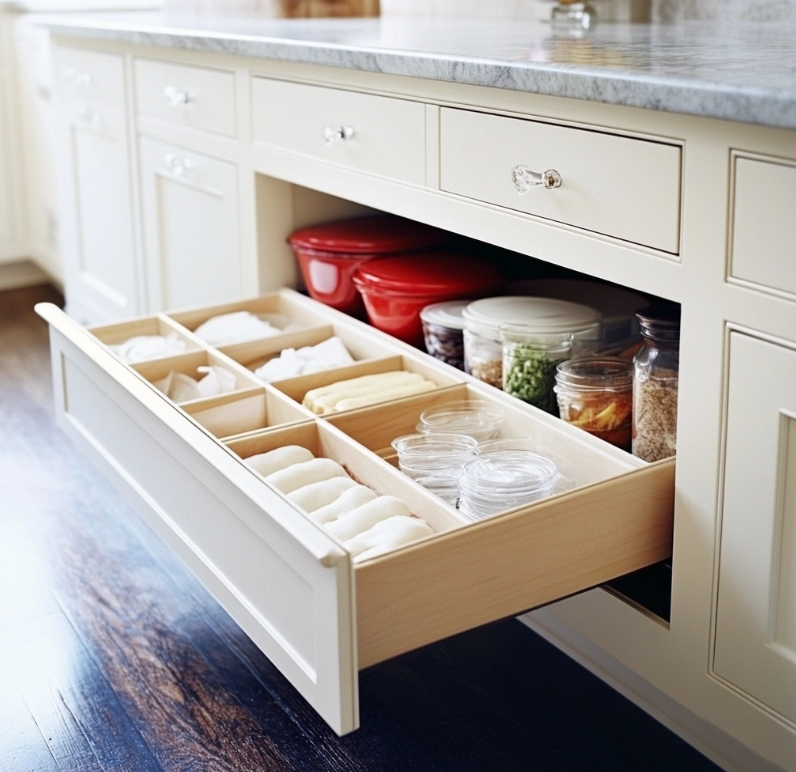
- Pull-out pantries
- Toe-kick drawers
- Appliance garages
- Vertical tray storage
In bathrooms:
- Recessed medicine cabinets
- Vanity drawer systems
- In-wall shelving
- Linen tower cabinets
These systems prevent countertop clutter and improve daily efficiency.
Designing Storage Around Daily Patterns
Effective storage follows behavior.
Frequently used items should be easy to access. Seasonal or occasional items belong in higher or deeper storage zones.
Good design asks:
What is used daily?
What is used weekly?
What is used rarely?
Storage is then structured accordingly.
When systems match routines, order maintains itself.
Planning for Change Over Time
Homes evolve. Families grow. Work patterns shift. Hobbies expand. Needs change.
Flexible storage systems—adjustable shelving, modular cabinets, convertible spaces—allow homes to adapt without major renovation.
This is one of the most overlooked aspects of long-term design.
Our Approach at Drapers Homes
At Drapers Homes, we treat storage as an essential part of livable design. We integrate concealed systems into floor plans, framing, and finish work so they support daily life without drawing attention to themselves.
Our goal is simple: Homes that feel open, organized, and effortless to maintain.
If you’re planning a new build or renovation, we’ll help you design storage solutions that serve you quietly and reliably for years to come.
Because a well-built home doesn’t fight your life. It supports it.