
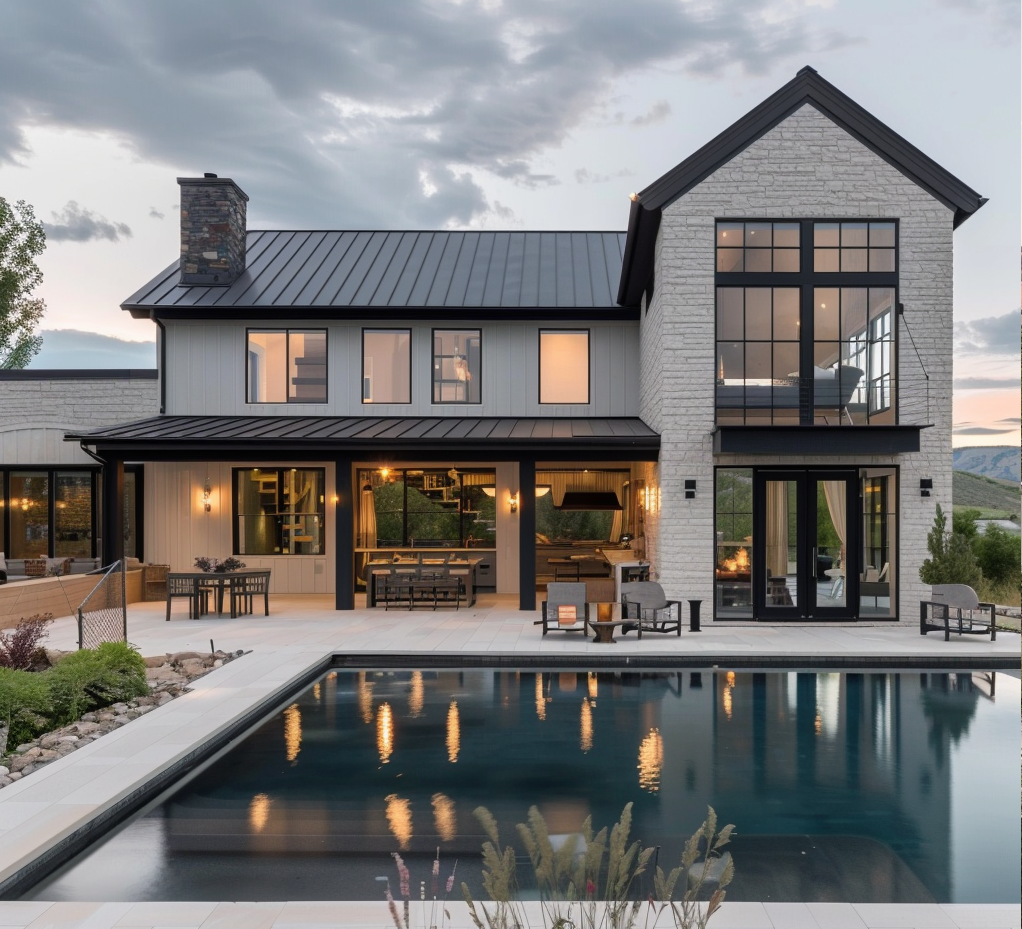
A well-designed Barndominium is not defined by square footage.
It’s defined by flow.
How spaces connect.
How light moves.
How privacy is protected.
How daily routines are supported.
How outdoor living is integrated.
Floor plans determine whether a Barndominium feels expansive and effortless—or oversized and inefficient.
The strongest designs balance openness with structure.
Understanding How Barndominium Layouts Function
Barndominiums offer exceptional flexibility.
Their open-span construction allows for wide, uninterrupted interiors that can be shaped around lifestyle rather than rigid framing systems.
This freedom requires discipline. Without intentional planning, open space becomes wasted space. Great floor plans begin with movement patterns, not room labels.
Open-Concept Living Designs
Open layouts remain one of the most popular Barndominium configurations.
They create visual continuity and support modern living.
Integrating the Great Room
The great room often serves as the heart of the home.
It typically combines:
- Kitchen
- Dining area
- Living space
- Informal gathering zones
Large windows and high ceilings enhance openness and daylight access. When designed well, this space supports cooking, working, entertaining, and relaxing without feeling chaotic.
Proportion matters more than size.
Incorporating Loft Spaces
Lofts take advantage of vertical volume.
They are commonly used for:
- Guest bedrooms
- Home offices
- Creative studios
- Media spaces
- Teen retreats
Lofts should maintain visual connection to the main living area while preserving acoustic and privacy control.
Height must be balanced with comfort.
Split-Level and Multi-Level Configurations
Split-level layouts create natural zoning through elevation changes.
They work especially well on sloped sites.
Layering Public and Private Spaces
Typical split-level designs include:
- Main level for social spaces
- Lower level for bedrooms
- Upper level for recreation or offices
This separation enhances privacy without isolating family members.
Vertical movement becomes part of daily rhythm.
Wing-Based Layouts for Privacy and Clarity
Wing layouts divide the home into functional zones.
They are ideal for households that value separation between living and sleeping areas.
Organizing Living and Sleeping Wings
Common configurations include:
- Primary wing for kitchen and living spaces
- Secondary wing for bedrooms and baths
- Central connection corridor
- Outdoor living extensions
This structure improves noise control and supports long-term adaptability.
Privacy becomes architectural.
Courtyard-Centered Designs
Courtyard Barndominiums emphasize inward-facing outdoor living.
They are especially effective in warm or dry climates.
Designing Around a Central Outdoor Core
Courtyard layouts typically feature:
- Central pool or garden
- Surrounding living spaces
- Large glass openings
- Covered walkways
This configuration blurs boundaries between interior and exterior environments while maintaining privacy.
Outdoor space becomes part of daily life.
L-Shaped and Angular Floor Plans
L-shaped designs respond well to site constraints and view corridors.
They allow homes to frame outdoor spaces intentionally.
Maximizing Orientation and Access
In L-shaped layouts:
- One wing houses common areas
- One wing houses private rooms
- Outdoor decks fill the interior angle
- Natural wind and light patterns are optimized
This design supports both openness and enclosure.
Geometry becomes functional.
Designing for Circulation and Daily Movement
Floor plans succeed when movement feels natural.
Before finalizing layouts, consider:
- Entry paths
- Kitchen-to-dining flow
- Bedroom privacy routes
- Mudroom access
- Garage connections
- Outdoor transitions
Good circulation reduces friction.
Bad circulation creates daily irritation.
Integrating Pool and Outdoor Living Spaces
Many Barndominium homes emphasize outdoor recreation.
Pools, patios, and courtyards should be planned alongside floor plans—not added later.
Coordinating Indoor and Outdoor Zones
Successful designs align:
- Great rooms with patios
- Kitchens with outdoor kitchens
- Primary suites with pool views
- Lofts with terrace access
When outdoor areas are integrated structurally, they feel intentional rather than decorative.
Landscaping Strategies for Barndominium Properties
Landscape design supports both beauty and usability.
It should reinforce architecture rather than compete with it.
Selecting Climate-Appropriate Planting
Native and regional plants provide:
- Lower water use
- Reduced maintenance
- Improved resilience
- Natural integration
Plant selection should reflect local conditions and long-term sustainability.
Creating Poolside Atmosphere
Effective pool landscaping often includes:
- Textural grasses
- Shade-providing trees
- Low-maintenance shrubs
- Wind buffers
- Visual screens
These elements soften hardscape without increasing upkeep.
Establishing Privacy and Screening
Privacy should be layered.
Common solutions include:
- Evergreen hedges
- Structured shrub lines
- Decorative fencing
- Climbing plants
- Architectural screens
Natural barriers feel more permanent than temporary solutions.
Selecting Durable Pool Deck Materials
Surface materials affect safety, comfort, and maintenance.
Strong options include:
- Natural stone pavers
- Textured concrete
- Porcelain outdoor tiles
- Composite decking
Slip resistance and thermal comfort are essential considerations.
Performance matters more than appearance alone.
Designing Outdoor Lighting Systems
Lighting extends usability.
Well-planned systems include:
- Path lighting
- Accent uplighting
- Pool illumination
- Step lighting
- Perimeter security lighting
Good lighting increases safety and atmosphere simultaneously.
Adding Water Features and Relaxation Elements
Water features enhance sensory experience.
Popular options include:
- Cascading waterfalls
- Bubblers
- Fountains
- Reflecting basins
They introduce movement and sound without overwhelming the space.
Subtlety creates calm.
Furnishing Outdoor Living Areas
Outdoor furniture should mirror interior comfort standards.
Consider:
- Weather-resistant loungers
- Flexible seating groups
- Shade systems
- Outdoor rugs
- Storage solutions
Outdoor spaces should feel complete, not temporary.
Designing for Long-Term Adaptability
Barndominiums often evolve with their owners.
Strong floor plans allow for:
- Future room conversions
- Office expansion
- Guest accommodations
- Aging-in-place adjustments
- Lifestyle shifts
Flexibility protects investment.
Our Approach at Drapers Homes
At Drapers Homes, we design Barndominium floor plans as integrated living systems.
We analyze site conditions, lifestyle patterns, climate exposure, and long-term goals before shaping layouts. Our process ensures that interior spaces, outdoor environments, and structural systems work together from the beginning.
We do not design generic plans. We design homes that fit the land and the life.
If you are planning a custom Barndominium in Utah, we are here to help you create a layout that balances openness, privacy, performance, and comfort. Because the best floor plans are not copied.