
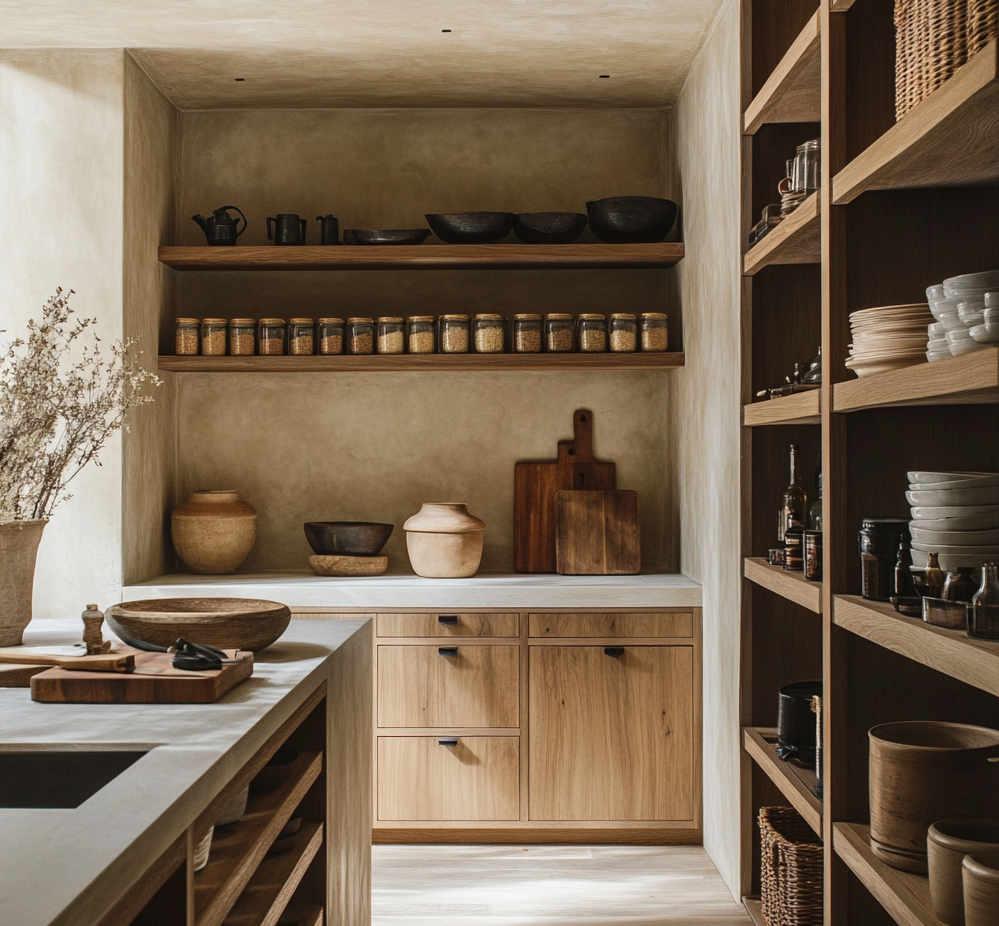
A well-designed pantry is not a storage room.
It is a working system.
It supports how food is purchased, stored, prepared, and replenished. When designed intentionally, it reduces friction in daily routines. When designed poorly, it becomes a source of clutter, waste, and frustration.
The best pantries are quiet collaborators.
They make kitchens easier to live in.
Designing a Pantry That Supports Daily Flow
Every pantry should begin with movement in mind.
How items enter.
How they are stored.
How they are retrieved.
How they are returned.
When these steps are clear, organization becomes natural rather than forced.
Establishing a Functional Layout
Layout determines whether a pantry feels supportive or chaotic.
Well-planned pantries balance accessibility with capacity. Shelving depth, aisle width, and reach height should reflect how the space will actually be used.
Effective layouts often include:
- Adjustable shelving for flexibility
- Clear sightlines for visibility
- Defined storage zones
- Comfortable circulation space
When items are easy to see and reach, waste and duplication decrease.
Creating Purposeful Storage Zones
Grouping similar items creates intuitive order.
Rather than organizing by appearance, strong pantries organize by use.
Common zones include:
- Baking and dry goods
- Snacks and lunch items
- Canned and preserved foods
- Bulk and overflow storage
- Small appliances
Zoning reduces searching and streamlines meal preparation.
Integrating Smart Storage Systems
Storage should adapt as needs change.
Rigid systems fail over time. Flexible systems grow with households.
Using Bins, Baskets, and Containers Strategically
Loose items create visual noise. Contained items create calm.
Baskets and bins are ideal for produce, packaged goods, and specialty items. Clear containers support inventory awareness and freshness management.
Consistency in container sizing improves both appearance and efficiency. Order should feel effortless.
Incorporating Pull-Out and Rotational Features
Deep storage requires mobility.
Pull-out drawers, sliding trays, and rotating organizers prevent items from disappearing into corners. These systems improve accessibility and reduce forgotten inventory.
Well-designed motion systems protect both backs and budgets.
Lighting and Atmosphere in Pantry Design
Lighting is often overlooked in storage spaces.
It should not be.
Designing Effective Pantry Lighting
Poor lighting turns organization into guesswork.
Integrated LED strips, recessed fixtures, or motion-activated lighting ensure every shelf remains visible. Balanced illumination prevents shadows and improves safety.
Light supports accuracy.
Selecting a Calm and Durable Color Palette
Color influences perception of order.
Neutral, soft-toned finishes create visual stability and allow food packaging to recede. Durable, washable surfaces protect against spills and wear.
Pantries should feel clean even when full.
Planning for Long-Term Use
A pantry must serve changing seasons and lifestyles.
Households grow.
Eating habits evolve.
Storage needs shift.
Design should anticipate these changes.
Building in Flexibility
Adjustable systems, modular shelving, and adaptable cabinetry prevent premature obsolescence. What works today should still work in ten years.
Longevity is intentional.
Designing for Maintenance and Cleanliness
Easy maintenance protects functionality.
Smooth surfaces, accessible corners, and washable finishes simplify cleaning. Ventilation and moisture control protect food quality and cabinetry.
A clean pantry stays organized.
Connecting Pantry Design to Kitchen Performance
Pantries do not exist in isolation.
They function as part of the kitchen ecosystem.
Placement, access points, and adjacency to prep areas determine whether storage supports or interrupts workflow. When integrated properly, pantries reduce congestion and improve efficiency.
Good kitchens move well.
Our Approach at Drapers Homes
At Drapers Homes, we design pantries as functional systems—not afterthoughts.
We study cooking habits, storage volumes, household patterns, and long-term needs before developing layouts. Our process integrates cabinetry, lighting, ventilation, and circulation to ensure pantries remain useful and adaptable over time.
We do not design for appearance alone. We design for everyday performance.
If you are planning a new kitchen or renovation, we are here to help you create storage solutions that simplify life rather than complicate it.
Because the best organization systems disappear into ease.